Trade Crypto Futures with
INR Margins

Lowest Fees

Trade Now
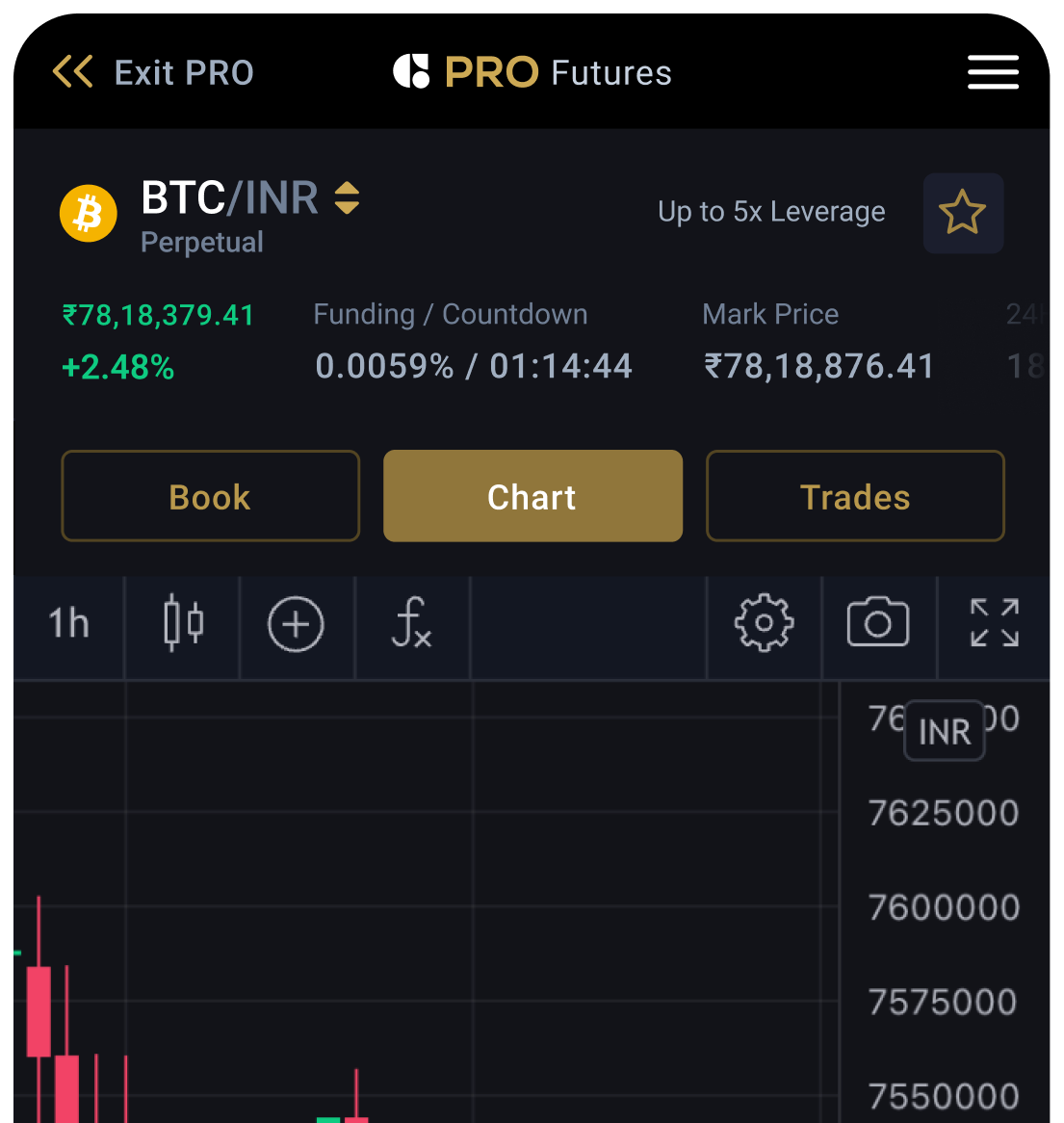
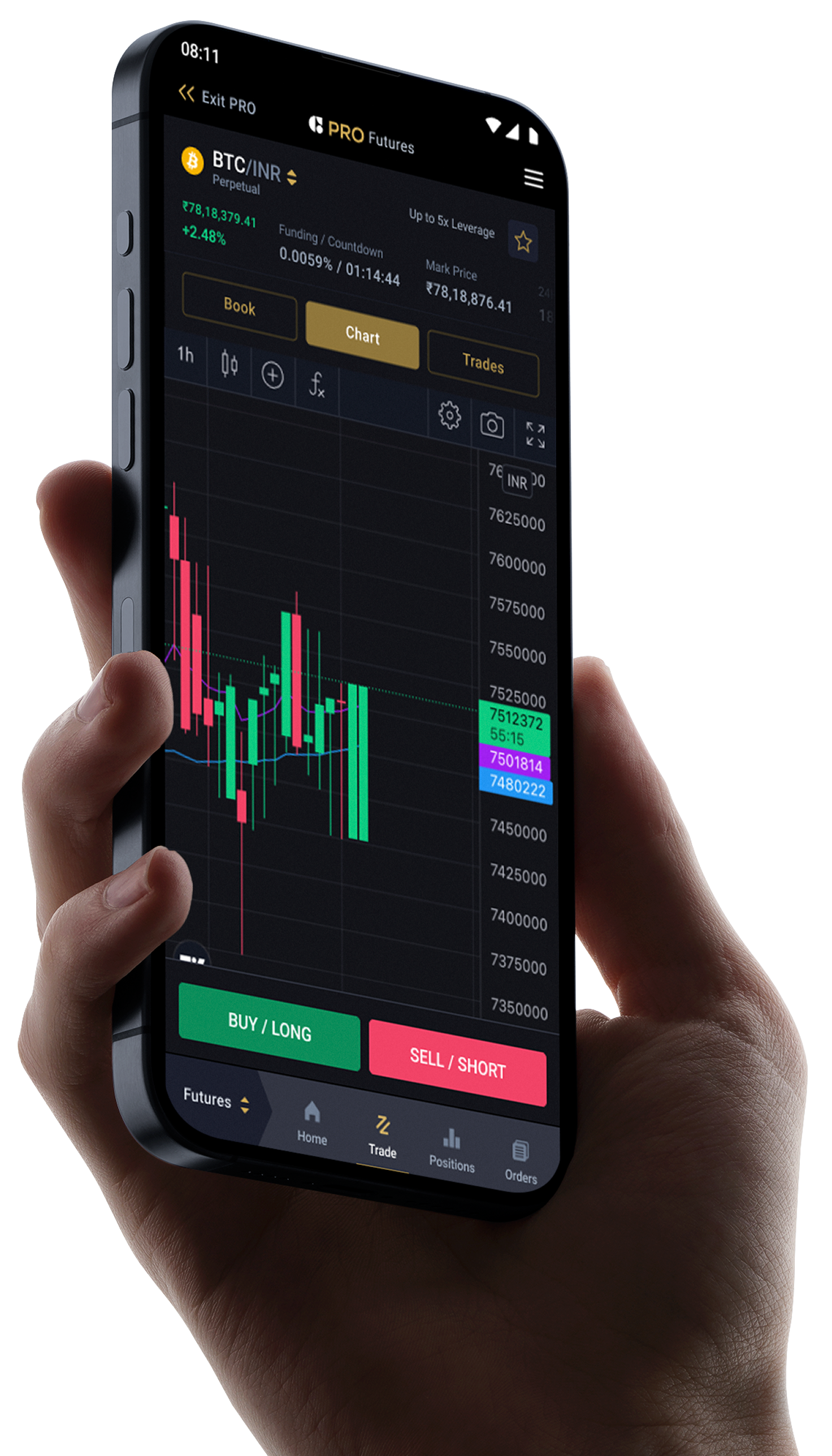
CoinSwitch PRO Futures Mobile Trading Interface

Explore Perpetual Futures Contracts

550+ Perpetual Contracts

550+ Perpetual Contracts

Diversify Smartly And Explore Limitless Potential

Up to 100x Leverage

Up to 100x Leverage

Increase Market Reach With Minimal Upfront Margin.

Supports INR

Supports INR

Direct INR Trading Without Conversion & Complication

Start With ₹100

Start With ₹100

Start Instantly With Low Investment Barrier

Why Choose CoinSwitch
to Trade in Futures

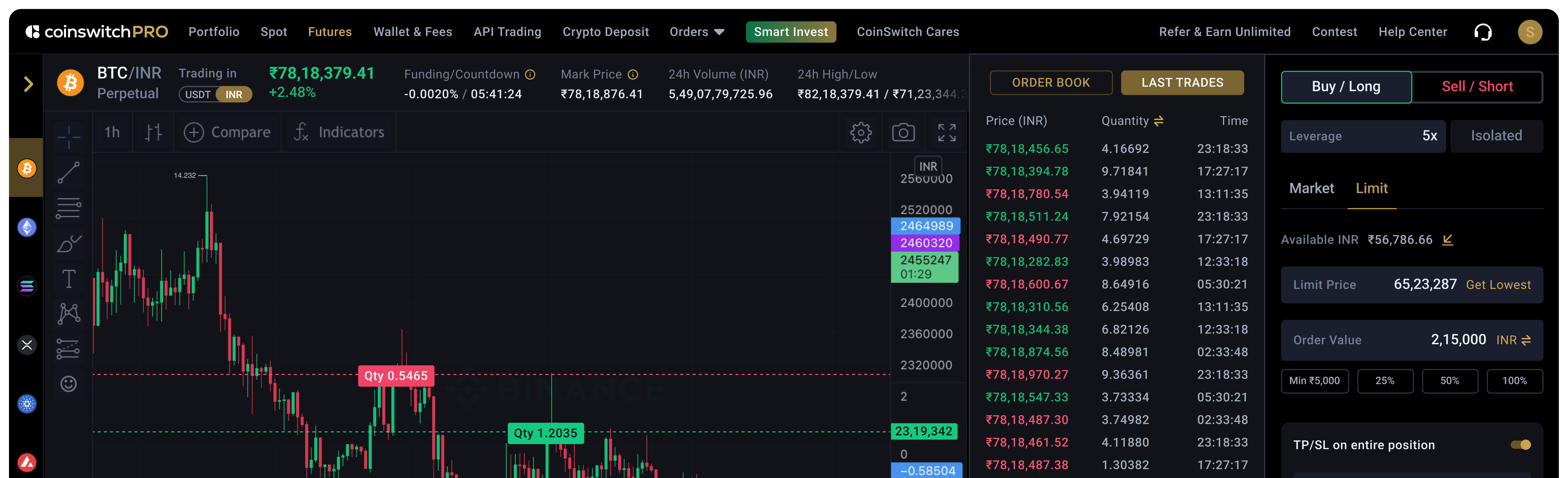
CoinSwitch PRO Futures Trading App
Background aura
Advanced Features

Advanced Features

Trade Confidently Using Powerful Execution Tools

Expert Picks

Expert Picks

Discover Top Futures Insights Curated By Market Professionals.

Safety & Security

Safety & Security

Your Assets Stay Protected With Advanced Security Layers.
Lowest Fees

Lowest Fees

Save More With Low, Transparent, Trader-Friendly Fees.

Contests & Rewards

Contests & Rewards

Unlock Exciting Rewards Through Regular Offers And Trading Competitions

Instant Settlement

Instant Settlement

Settle Your Trades Instantly With A Seamless Trading Experience

Loading fees structure...

FAQs

1. What is the funding rate? How does it work? How is it different for INR and Crypto Futures?

chevron_down
Funding rate is a small fee exchanged between traders to keep a perpetual futures contract close to the underlying market price. When the contract trades above spot, longs pay shorts. When it trades below spot, shorts pay longs. In INR-settled crypto futures, funding rates usually behave differently from USDT-settled crypto futures, because the demand, liquidity, and open interest on the futures exchange vary across markets. As a result, funding can feel higher on some pairs, especially during volatile bitcoin future moves.

2. Why are funding costs so high on my positions? How can I reduce them?

chevron_down
High funding usually means one side of the market is overcrowded. For example, during sharp BTC rallies, long btc futures get expensive because everyone is on the same side. To reduce funding costs, you can: • Switch to pairs with calmer funding cycles • Reduce leverage • Hold positions for shorter durations • Use limit orders and time entries better Funding isn't a platform fee. It's simply a balance mechanism built into crypto futures trading.

3. What's the difference between market and limit orders?

chevron_down
A market order basically says "get me in right now," so it grabs the best price available at that moment. A limit order is slower but more controlled — you tell the system the exact price you're willing to trade at, and it only executes if the market touches that level. If you care about speed, market orders work. If you care about getting the price you want, limits are usually better.

4. What are long and short positions? How do you decide between them?

chevron_down
A long is a bet that the price will rise. A short is a bet that it'll fall. If you expect the bitcoin future price or any future crypto coins to go up, you go long. If you expect a drop, you go short. Shorts are a huge reason why future derivatives are used not just for speculation but for hedging too.

5. How can I use leverage in crypto futures trading?

chevron_down
Leverage lets you trade a bigger position without blocking the full amount upfront. So if you're using 10x leverage, a small margin can give you exposure to a much larger futures contract.

6. How do you adjust leverage or other features in an open position?

chevron_down
Once your position is live, you can usually edit: • Leverage • TP/SL • Margin allocation Increasing margin lowers liquidation risk. Reducing leverage also gives you more breathing room. Not all changes are allowed during extreme volatility.

7. What is the difference between "orders" and "positions"?

chevron_down
Orders are instructions you place—market, limit, TP, SL, etc. Positions are trades that have successfully executed and are now live in the market. Orders can sit in the orderbook. Positions actively move with the price.

8. How to set TP/SL? Can these be adjusted for open positions?

chevron_down
Take-Profit and Stop-Loss are price levels where your position auto-closes. Yes, TP/SL can be edited anytime while the position is open. Many traders combine TP/SL with trailing stops for better risk management.

9. What is the tax structure for crypto futures trading in India?

chevron_down
In India, profits from crypto futures trading generally fall under business income for tax purposes. Losses from this side of trading can often be adjusted against other business income. Trading fees on the platform may attract GST, but your actual profit numbers don't. Because trading patterns vary from person to person, it's always better to check once with a tax professional.

10. How is trading crypto futures different from equity futures?

chevron_down
Crypto runs 24x7, equity futures don't. Crypto funding rates apply; equities have no funding. Crypto margining is more flexible. Also, crypto futures in India tend to be more volatile than index or stock futures, so leverage management matters more.

11. How does liquidation work in crypto futures trading?

chevron_down
If your margin isn't enough to hold your position, the exchange auto-closes it at the liquidation price to prevent your balance from going negative. Higher leverage, aggressive entries, and big swings in BTC futures can speed up liquidation.

12. Can crypto futures be used for hedging? How?

chevron_down
Yes. Hedging is one of the original use-cases of future derivatives. Example: If you hold Bitcoin and want to protect against a fall, you short bitcoin future contracts. If the market drops, your short profits help offset the loss on your holdings.

13. How do perpetual contracts differ from traditional futures contracts?

chevron_down
Traditional futures have an expiry. Perpetuals never expire—they stay open as long as you maintain margin. Funding rates are what keep perpetuals close to spot, replacing the "expiry" mechanism of classic futures.

14. What are the risks involved in crypto futures trading?

chevron_down
Crypto futures move quickly, so even a small price swing can hit your PnL hard when leverage is involved. Funding rates can also spike during busy market hours, which adds to your cost of holding a position. There's always the chance of liquidation if your margin isn't enough to handle sudden moves. Most traders manage this by keeping their leverage reasonable, placing TP/SL early, and avoiding oversized positions when the market is behaving unpredictably.

15. What factors influence funding rates in crypto futures?

chevron_down
• Market demand (imbalanced long/short interest) • Volatility • Premium/discount vs spot • Liquidity on the futures exchange • Overall sentiment around future crypto coins Funding is dynamic and often spikes during major Bitcoin moves.

16. Can you trade crypto futures without owning crypto?

chevron_down
Yes. With most trade future apps, you only need to post margin in INR or stablecoins. That's why crypto futures trading is popular—no need to hold tokens to trade them.

17. What are funding fees in crypto futures, and why are they important?

chevron_down
Funding fees are the periodic payments between long and short traders. They keep the futures contract aligned with spot prices. They matter because they directly affect your PnL. A good trader watches funding before opening large or long-term positions.

18. What is the difference between maker and taker fees in crypto trading futures?

chevron_down
When you place a limit order that sits on the orderbook, you're acting as a "maker" because you're adding liquidity. If you place a market order and instantly match with an existing order, you're a "taker." Maker trades usually cost less since they help keep the market deep and active.

19. How can traders optimize costs with maker-taker fees in crypto trading?

chevron_down
Use limit orders to qualify as a maker, especially during calm markets. Only use market orders when you need speed. For heavy traders, this difference can meaningfully lower costs in futures trading.

Download CoinSwitch App Today

download_androiddownload_ios