Bitcoin halving becomes a hotly debated event, whenever it approaches. While paste halvings did not become so popular as very few people from outside the Bitcoin trading and investing world know about it, it’s different today.
There is a sharp rise in the interest around Bitcoin and hence, the rise in interest in Bitcoin Halving too. The most recent halving occurred in 2024 and it triggered a lot of questions amongst those who did not know about it.
The event often sounds technical and feels distant. But it quietly drives supply, shapes narratives, and nudges long-term price direction in a way few other events can.
Search trends spike. Analysts step in. Charts start circulating everywhere. The phrase bitcoin halving explained floods feeds because people want clarity. What exactly changes? Why does the market react? And how does someone in India interpret all of this through the lens of regulation and taxation?
Bitcoin does not behave like traditional assets. There is no central bank adjusting supply. No policy committee stepping in. The system follows a fixed script. Predictable. Transparent. Yet every cycle feels different.
This guide breaks the concept down in plain language. It connects halving to price behavior. It ties everything back to the Indian context, where taxation and compliance influence every decision.
What is halving?
Bitcoin halving is a process that keeps its supply tight and controlled. It’s an integral part of the entire Bitcoin ecosystem.
Bitcoin has a maximum supply cap. 21 million coins. That number never changes. The system releases new coins gradually, through mining rewards. But here is the twist. The pace slows down over time.
Every few years, the reward that miners receive gets cut in half. That event is called a halving.
It sounds simple. It is simple. Yet the implications run deep.
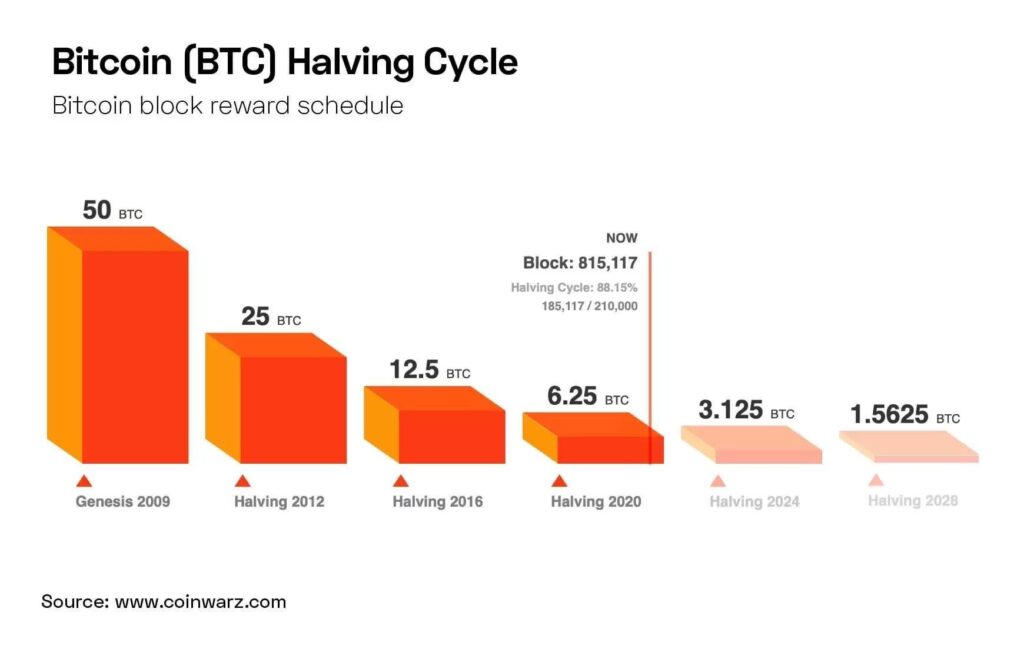
- In 2009, miners earned 50 BTC per block
- In 2012, that dropped to 25 BTC
- In 2016, it moved to 12.5 BTC
- In 2020, it became 6.25 BTC
- In 2024, it stands at 3.125 BTC
Each reduction tightens supply. Fewer new coins enter circulation. Scarcity increases.
This is where bitcoin halving India conversations begin. Supply shrinks. Demand plays its role. The balance shifts. Slowly. Then suddenly.
How Bitcoin halving works
If you are wondering what actually changes when halving hits, the answer is inside Bitcoin’s code.
Bitcoin runs on Proof of Work. Miners validate transactions. They solve complex mathematical puzzles. In return, they receive Bitcoin rewards.
The system tracks blocks. Every 210,000 blocks, something happens automatically. The reward drops by 50%. No manual input. No override.
The process unfolds in a predictable loop:
- Transactions enter the network
- Miners validate and secure them
- A block gets added to the chain
- Miners receive BTC
- After a fixed number of blocks, the reward cuts in half
That reduction slows down new supply instantly. Demand, however, follows its own path. Sometimes steady. Sometimes rising sharply.
This imbalance creates pressure. Supply tightens. Market participants react. That is why the btc halving effect on price becomes a major talking point every cycle.
It is not about instant impact. It is about gradual buildup.
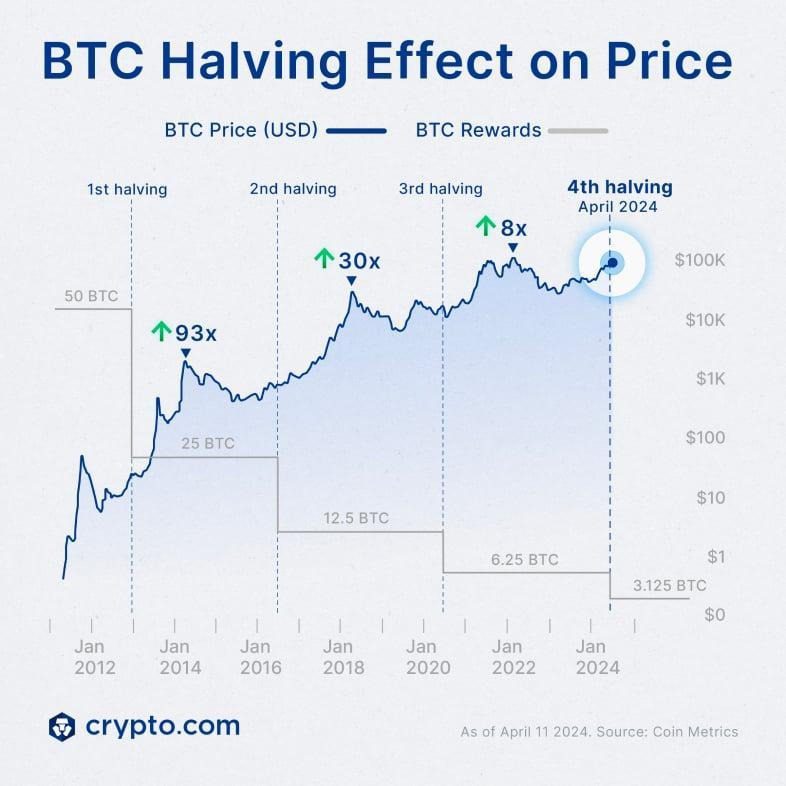
History of halvings & price impact (chart)
2012 Halving
Bitcoin traded around $12 before the event. Interest stayed limited. Awareness remained niche. Then momentum started building. Slowly at first. Then aggressively. The price climbed toward $1,100 over the following year.
2016 Halving
The market entered with more awareness. Bitcoin hovered around $650. Months passed. Activity picked up. Retail participation surged. The price pushed toward $20,000 in the next cycle.
2020 Halving
The setup looked different. Institutions entered the conversation. Bitcoin traded near $8,500. Liquidity increased. Global macro factors played a role. The price eventually reached $69,000.
Each cycle followed a loose rhythm:
- A quiet accumulation phase
- Gradual price movement
- Strong expansion months later
The key takeaway sits in timing. Price reactions rarely align exactly with the halving date. They stretch across months. Sometimes longer.
2024 halving — what happened?
A lot of people try to decode the recent Bitcoin cycle after every halving. But the 2024 halving introduced new dynamics.
The reward dropped again. From 6.25 BTC to 3.125 BTC. Supply tightened further. Yet the market behaved differently this time.
The price started moving earlier. Much earlier.
Institutional participation increased. Spot Bitcoin ETFs entered the scene. Liquidity expanded. Market depth improved.
Instead of a delayed reaction, the rally began before the halving. That shift surprised many participants who expected the classic post-halving surge.
Key observations from this cycle:
- Strong pre-halving momentum
- Higher institutional presence
- Faster information flow
- Increased global participation
This evolution fuels conversations around bitcoin halving 2026. Future cycles may continue to shift. Patterns may stretch. Reactions may arrive sooner.
The market grows. Behavior adapts.
Should you buy BTC before/after halving?
A lot of people try to pin down the perfect entry point around halving. Now this is the question a lot of investors and traders have.
Historical behavior offers clues. Not certainty.
Some participants accumulate early. Months before the halving. They focus on long-term positioning. They track supply reduction as a structural factor.
Others wait. They observe price movement. They respond to momentum.
A third group focuses on cycles. They study previous patterns. They look for similarities. They try to align entry with broader sentiment.
Across all approaches, one idea repeats: halving acts as a long-term driver. It shapes supply dynamics over time. It does not trigger instant results.
Market participants who track halving crypto india discussions often lean toward patience. They look beyond short-term fluctuations. They watch how supply and demand interact across months.
The market moves in phases. Sharp spikes. Quiet consolidations. Sudden pullbacks. Extended rallies.
Halving sits in the background. Constant. Predictable. Influential.
Indian tax implications
The taxation on Bitcoin transactions, whether they are due to or related to halving, are exactly same as they are in the standard transactions.
Crypto taxation in India follows a defined structure:
- 30% tax on gains
- 1% TDS on transactions
- Losses stay separate from gains
This creates a unique situation. Market gains may look strong on charts. Actual returns depend heavily on taxation.
Consider a scenario. Bitcoin rises after halving. Profits appear significant. Taxes apply immediately. TDS impacts liquidity during trading.
This layer shapes behavior. It influences holding periods. It affects trading frequency.
That is why bitcoin halving india discussions extend beyond price charts. They include tax awareness. They include compliance. They include planning.
Market cycles create opportunities. Tax rules define outcomes.
Conclusion
Bitcoin halving is at the core of Bitcoin’s design. Quiet. Consistent. Powerful.
It controls supply.
It shapes long-term trends.
It influences how participants think about scarcity.
Each cycle adds a new layer. Retail enthusiasm in early years. Institutional participation in later phases. Expanding global reach.
For participants in India, the equation includes one more dimension. Regulation. Taxation. Compliance.
Understanding halving creates clarity. Price movements start making sense. Market cycles feel less random.
Bitcoin follows its script. Every four years. Without deviation.
The market reacts. Adapts. Evolves.
And the story continues.
FAQs:
What is Bitcoin halving and why does it happen?
Bitcoin halving is a regular event in the Bitcoin ecosystem. This is the event that occurs at an interval of roughly 4 years. This is when the bitcoin mining reward slashes by 50%. As a result, the rate of new Bitcoins entering into the circulation reduces.
The whole idea behind this system is to control the supply chain and maintain scarcity. As only 21 million BTC will ever exist, halvings slow down the new issuances over the time and keeps the inflation in check.
How does Bitcoin halving affect price in India?
Halving reduces new supply globally. And in the past, this has created an upward price pressure. And as the Indian prices follow the global prices, the effect is almost similar.
But there is one difference, and that’s taxation. Indian traders have to pay fixed 30% tax on gains and 1% TDS. So this directly impacts their profitability.
When is the next Bitcoin halving after 2024?
The next Bitcoin halving will take place around 2028. There is no fix timing because there is no fixed timing decided, only an estimate about the year exists. Why? Because halving occurs after every 210,000 blocks and this takes around four years. That’s why the exact date remains a bit sketchy, but the interval is of roughly 4 years.
Should Indian investors buy Bitcoin before halving?
If you look at the post-hlaving performance of the Bitcoin in the past, it feels more like it has behaved as a long-term supply driver. Price momentum often builds over the months. Sometimes, even after the halving happens. So Indian investors have to keep a watch on the momentum long before the halving approaches. And if they find the momentum is enough, they should enter the trade.