Most people don’t walk into crypto thinking about architecture.
They just want to buy something. Bitcoin, maybe Ethereum. So they download an app, sign up, verify themselves, and make a purchase. The process feels familiar. Almost like using any financial platform.
That’s usually a centralized exchange.
But sooner or later, another term shows up. DEX. And the moment that happens, things start shifting. Because now the question is not just what you’re buying, it becomes where and how you’re interacting with the system itself.
That’s where the whole cex vs dex conversation begins.
And it’s not just a technical comparison. It’s really about control. About trust. About how much responsibility you’re willing to carry once your money moves into crypto.
What Is a Centralized Exchange (CEX)?
A centralized exchange is the closest thing crypto has to traditional finance.
Platforms like Binance or Coinbase are built in a way that feels structured from the first interaction. You create an account, verify your identity, deposit funds, and start trading.
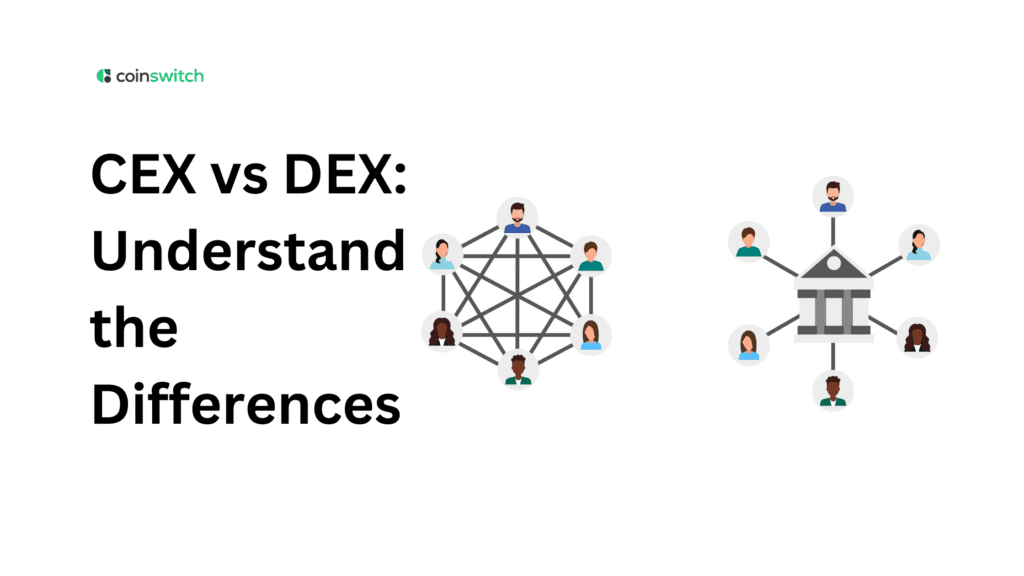
The cex meaning is straightforward. There is a company in the middle managing everything.
You don’t think about custody when you use it. You don’t worry about how orders are matched. You just click, and things happen.
But that convenience comes with a trade-off.
The exchange holds your funds.
That one detail changes the entire dynamic. Because while the experience feels easy, the control sits somewhere else. For many users, especially beginners, that feels acceptable. The system works, transactions go through, and everything feels predictable.
And in the early stages, predictability matters more than anything else.
What Is a Decentralized Exchange (DEX)?
A decentralized exchange doesn’t try to feel familiar.
In fact, the first time you use one, it feels slightly uncomfortable. There’s no sign-up. No password. No support chat waiting in the corner.
Instead, you connect a wallet. Something like MetaMask. And from that point on, every action comes directly from you.
The dex meaning revolves around that idea. No central authority, no intermediary holding your funds.
Platforms like Uniswap operate through smart contracts. You’re not placing orders through a company. You’re interacting with code.
That gives you full control. But it also removes safety nets.
There’s no one to reverse a transaction if you make a mistake. No recovery if you lose access to your wallet.
That’s the shift.
With a DEX, freedom increases. But so does responsibility.
Key Differences Between CEX and DEX
At first, the difference looks simple. Centralized versus decentralized.
But when you actually use both, the contrast feels deeper.
A crypto exchange comparison between the two quickly moves beyond definitions. It starts showing up in how things feel when you interact with them.
CEX platforms feel guided. You are moving through a system that’s been designed to reduce friction.
DEX platforms feel open. You are not being guided, you are choosing every step yourself.
One gives you convenience. The other gives you control.
And somewhere between those two, most users eventually find their own balance.
That’s why the centralized vs decentralized exchange debate never really has a fixed winner. It depends entirely on what you value more.
Security Comparison
Security in crypto is never a simple conversation.
With a CEX, the platform takes responsibility. Your funds are stored within their system, protected by their infrastructure. That creates a structured layer of protection, but it also creates a central point that can be targeted.
History has shown that even large exchanges can face breaches.
With a DEX, that central point disappears. Your funds stay in your wallet. No one else holds them.
At first, that sounds safer. And in some ways, it is. But it shifts the burden.
If you lose your private key, there’s no recovery. If you approve the wrong transaction, it’s final.
So the comparison isn’t about which one is safer in absolute terms.
It’s about where the risk sits.
With CEX, risk is centralized.
With DEX, risk is personal.
Liquidity Comparison
Liquidity doesn’t feel important until it suddenly is.
You place a trade, and it either executes instantly… or it doesn’t.
Centralized exchanges usually have deeper liquidity. They bring together large numbers of buyers and sellers, which makes execution smoother. Especially for large trades, this matters a lot.
DEX platforms use liquidity pools instead. Users provide funds, and trades happen against those pools rather than direct counterparties.
This system works well, but it depends heavily on how much liquidity exists in that pool.
For popular tokens, it feels seamless. For smaller ones, it can feel limited.
So when comparing CEX vs DEX here, centralized exchanges tend to feel more stable for execution, especially at scale.
Fees Comparison
Fees are where expectations often flip.
CEX platforms usually charge clear trading fees. You know the percentage, you know what you’re paying. It feels predictable.
DEX platforms don’t always charge high platform fees, but they introduce something else. Network costs.
And those costs don’t stay constant.
When the network is busy, fees rise. Sometimes unexpectedly. Sometimes significantly.
So while DEX trading can feel cheaper at times, it can also become expensive depending on timing.
CEX offers consistency.
DEX offers variability.
And depending on when you trade, either one can feel like the better option.
Which Is Better for Beginners?
For someone new, the answer usually becomes clear within minutes of trying both.
CEX platforms feel easier. You sign up, follow prompts, and you’re ready. It doesn’t feel like you need to understand the system deeply to use it.
DEX platforms feel different.
You need to understand wallets. You need to recognize transaction approvals. You need to know what you’re signing.
That learning curve isn’t impossible. But it exists.
So for beginners, centralized exchanges tend to feel like the natural starting point.
And then, slowly, as confidence builds, decentralized platforms start making more sense.
Use Cases for Each
This is where the conversation becomes more practical.
CEX platforms work well for everyday use. Buying, selling, converting assets quickly. They provide structure and speed.
DEX platforms become useful in different situations.
Accessing newer tokens before they appear on centralized platforms. Trading directly from your wallet. Maintaining full control over your assets.
Many users don’t choose one over the other. They use both.
CEX for entry and exit.
DEX for flexibility and exploration.
That combination is becoming more common because it balances convenience with control.
Conclusion
The difference between CEX and DEX isn’t just technical. It’s philosophical.
One system is built around ease. The other is built around independence.
Understanding cex vs dex is really about understanding where you stand between those two ideas.
Some people prefer simplicity. Others prefer full control.
Most people, over time, end up somewhere in the middle.
FAQs:
What is the difference between CEX and DEX?
At a surface level, it looks simple. One is centralized, the other isn’t. But the real difference shows up when you use them. A CEX handles everything for you, funds, orders, security. A DEX steps back completely. You stay in control. That shift, from convenience to ownership, is where the difference actually lives.
Is DEX safer than CEX?
It depends on what “safe” means to you.
A DEX removes the risk of a central platform holding your funds, which sounds safer. But then the responsibility shifts entirely to you. One wrong transaction, one lost key, and that’s it. With CEX, risk sits with the platform. With DEX, it sits with you.
Which is better for beginners?
Most beginners feel comfortable on a CEX without even thinking about it. The interface guides you, the steps feel familiar, and support exists if something goes wrong. A DEX feels different from the start. No hand-holding, no safety net. It’s not harder forever, but the first few interactions definitely feel unfamiliar.
Can I use both CEX and DEX?
Yes, and that’s what many people end up doing anyway.
You use a CEX to enter the market easily, buy assets, move funds. Then you shift to a DEX when you want more control or access to different tokens. It’s not really a choice of one over the other. It’s more about when each one makes sense.