Introduction
Crypto investors keep circling back to one debate. Which networks will actually carry global adoption? In 2026, that conversation revolves around layer 1 and layer 2. These systems determine speed, cost, and reliability. Capital follows performance. Developers follow the opportunity. Institutions follow stability. In this article, we will take a look at some of the top Layer 1 and Layer 2 crypto coin ecosystems that investors and analysts are tracking.
What Are Layer 1 and Layer 2 Blockchains?
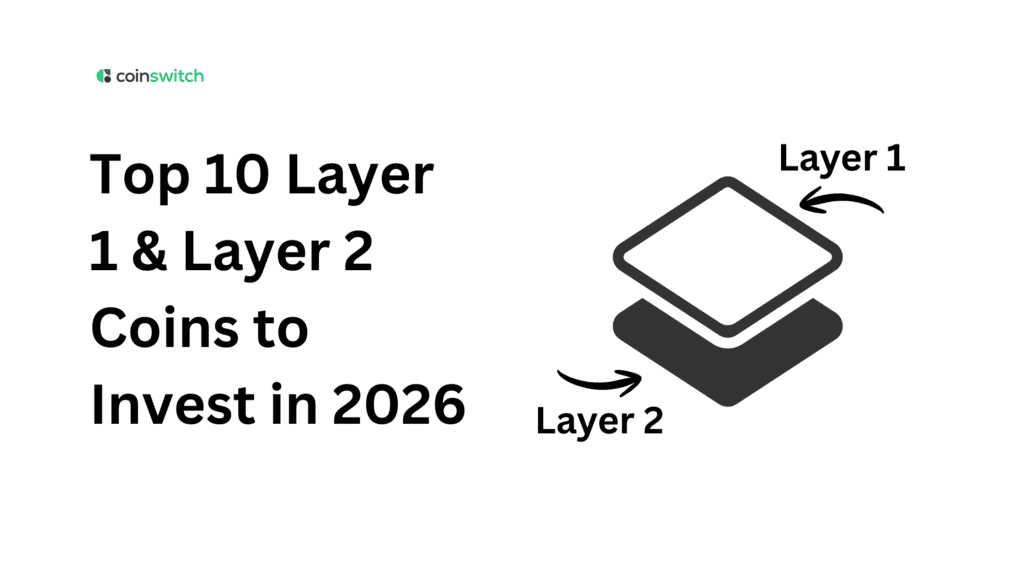
A layer 1 blockchain acts like the bedrock of the entire network. It validates transactions directly. It secures consensus. It defines the rules.
Ethereum, Solana, Avalanche, and others operate as layer 1 systems. Validators maintain security. Staking aligns incentives. Governance shapes upgrades.
Layer 2 builds on top of layer 1. It processes transactions separately. Then it settles the final data back on the base chain. This approach reduces congestion. It increases throughput. It lowers average fees.
Why Scalability Solutions Matter in 2026
Network usage has expanded sharply. Decentralized finance continues to evolve. On-chain gaming attracts millions. Tokenized assets generate steady volume.
Blockchains that struggle with congestion lose momentum quickly. Users migrate fast. Developers shift environments quickly. Liquidity relocates quickly.
Layer 1 vs. Layer 2: Key Differences
Security and Decentralization
Layer 1 secures transactions at the protocol level. Validators confirm blocks. Nodes enforce rules.
Security depends on consensus strength. Proof of Stake dominates modern networks. Large validator sets strengthen resilience.
Layer 2 inherits security from layer 1. It anchors the final settlement to the base chain. Rollups bundle transactions together. Zero-knowledge proofs verify data efficiently.
Security models vary, yet alignment with layer 1 remains essential.
Read More: Best Top 10 Free Crypto Mining Apps in 2026
Scalability and Transaction Costs
Layer 1 scaling increases throughput gradually. Hardware constraints limit extreme expansion.
Layer 2 scaling introduces dramatic improvements. It compresses transaction data. It spreads costs across batches. Fees often drop significantly during peak demand.
Developers often deploy consumer applications on layer 2 first. Cost sensitivity drives that choice.
Developer Ecosystem and Adoption
Developers shape long-term value. Grants attract builders. Hackathons stimulate experimentation. Ecosystem funds accelerate innovation.
Layer 1 platforms compete for application diversity. Layer 2 platforms compete for transaction volume.
Adoption creates compounding momentum. When developers build actively, users follow naturally.
Key Factors to Evaluate L1 & L2 Coins
Network Usage and Active Addresses
Usage metrics reveal genuine traction. Active addresses indicate participation.
On-chain analytics platforms track daily growth. Analysts watch address expansion closely. Steady increases signal durable engagement.
Short spikes mean less than sustained activity. Long-term consistency matters more than temporary excitement.
Total Value Locked (TVL)
TVL reflects capital confidence. DeFi protocols rely on liquidity.
Higher TVL often strengthens ecosystem credibility. Stable liquidity reduces friction for traders and builders.
Shifts in TVL trends frequently precede narrative changes.
Roadmap and Upgrades
Roadmaps reveal strategic direction. Protocol upgrades demonstrate execution.
At the same time, scalability improvements and staking enhancements shape the ecosystem’s overall perception. Teams that deliver upgrades consistently earn trust steadily.
Execution builds reputation faster than promises.
Institutional and Enterprise Adoption
Institutional adoption transforms perception. Enterprise integration validates infrastructure strength.
Payment providers explore blockchain rails. Asset managers tokenize products. Corporations pilot settlement systems.
These integrations increase network relevance beyond speculation.
Read More: 6 Best Free Crypto Cloud Mining Platforms
Top 10 Layer 1 & Layer 2 Coins to Watch in 2026
1. Ethereum (ETH) – Layer 1
Ethereum anchors the smart contract economy. It secures thousands of decentralized applications.
Its roadmap emphasizes rollup-centric scaling. Layer 2 growth strengthens Ethereum’s position further.
Developers continue building within its vast ecosystem. ETH remains central to most decentralized finance activity.
2. Solana (SOL) – Layer 1
Solana was designed to deliver performance. And so it does! It delivers high throughput and hyper-fast confirmation times.
Many developers favor Solana, especially those working on gaming and consumer applications. Trading platforms benefit from Solana’s low-latency design.
Ecosystem expansion accelerated throughout 2026.
3. Avalanche (AVAX) – Layer 1
Avalanche introduced customizable subnets. Enterprises can easily deploy dedicated chains with Avalanche. Its consensus mechanism supports quick finality. And the developers appreciate architectural flexibility.
That’s why AVAX continues to attract infrastructure-focused projects.
4. Polkadot (DOT) – Layer 1
Polkadot centers on interoperability. Parachains connect specialized networks.
Shared security reduces duplication across ecosystems. Governance remains community-driven.
DOT supports innovation through modular expansion.
5. Cosmos (ATOM) – Layer 1
Cosmos promotes sovereign chain development. Interchain communication enables seamless asset transfers.
Developers launch independent blockchains with shared standards. ATOM benefits from cross-ecosystem connectivity.
Its modular philosophy has made it very popular amongst infrastructure builders.
6. Arbitrum (ARB) – Layer 2
Arbitrum leads Ethereum layer 2 adoption. It uses optimistic rollup technology.
DeFi protocols migrated heavily to Arbitrum. Fee efficiency attracts consistent usage.
ARB supports governance and ecosystem incentives.
7. Optimism (OP) – Layer 2
Optimism advances Ethereum scaling through rollups. It champions sustainable ecosystem funding.
The Superchain model promotes shared infrastructure. OP strengthens governance participation within this structure.
Developers deploy applications rapidly across their network.
8. Polygon (MATIC) – Layer 2
Polygon evolved beyond early scaling solutions. It integrates zero-knowledge technology extensively.
A lot of enterprises are picking Polygon for tokenization initiatives. And MATIC (now POL) powers transactions and staking across its ecosystem.
As it’s designed for multi-chain operations, demand generally remains high as well.
9. Starknet (STRK) – Layer 2
Starknet leverages zero-knowledge proofs deeply. It enhances scalability while preserving strong cryptographic assurances.
Developers adopt Cairo for advanced contract logic. STRK supports governance and ecosystem alignment.
Its architecture appeals to privacy-focused builders.
10. Base (BASE Ecosystem Token) – Layer 2
Base operates as an Ethereum-aligned layer 2 network. It benefits from strong exchange integration.
Developers focus on consumer applications within Base. Ecosystem activity expanded steadily in 2026.
Its simplicity encourages rapid onboarding.
Read More: Crypto Market Timings: What Is the Peak Trading Period for Cryptos in India & the Globe?
Layer 1 vs. Layer 2 Investment Strategies
Investors approach Layer 1 Coins as foundational infrastructure assets. These networks secure value at the base layer.
Layer 2 Crypto Coin projects capture scaling demand. Transaction growth often drives their narratives.
Some portfolios prioritize established layer 1 networks. Others emphasize emerging layer 2 adoption curves.
Risks of Investing in L1 & L2 Coins
Technology and Competition Risks
This has always been a problem with the blockchain. Here, innovation is regular and rapid. And competing protocols are launched almost daily.
That’s why Layer 1 platforms have to fight constantly for dominance. Similarly, there is a cut-throat competition among Layer 2 protocols to reduce transaction fees and throughput.
This can cause serious problems. Any upgrade can shift the entire ecosystem’s preference quickly, and the market might react negatively to this.
Regulatory and Market Risks
Regulatory clarity is a big problem for the entire crypto industry. While regulatory compliance is becoming more crypto-friendly, the risk remains. Any change in the policy is reflected in the value of these tokens.
Market volatility is a big concern. It affects all digital assets, and any liquidity cycle can trigger cascading effects.
This is when institutional flows can intensify both upward and downward momentum.
Long Term Outlook for L1 & L2 Coins in 2026
Adoption continues expanding steadily. Tokenization initiatives attract traditional financial institutions.
Layer 1 networks refine core security. Layer 2 solutions handle mass transaction flow.
Developers focus on interoperability and modular systems. Enterprises explore blockchain integration across finance and logistics.
Both layers function as complementary infrastructure. Together, they form the backbone of digital asset ecosystems in 2026.
Conclusion
Layer 1 establishes security and governance. Layer 2 delivers scalability and cost efficiency.
Layer 1 Coins anchor foundational value. A Layer 2 Crypto Coin amplifies network capacity.
Usage metrics, TVL trends, and roadmap execution greatly influence perception. As adoption broadens, these layered architectures will define blockchain expansion throughout 2026.
FAQs
1. What are top layer 2 coins?
If you are looking for top layer 2 coins, you might find Arbitrum, Optimism, or Polygon interesting. Starknet and Base ecosystem tokens could be a good investment opportunity, too. Overall, these tokens focus on reduced transaction fees and quick communications. Make sure you look for strong developer activity and rising Total Value Locked while filtering the best layer 2 coins.
2. What are the top 10 L2s?
The top 10 L2 ecosystems commonly referenced in 2026 include:
• Arbitrum
• Optimism
• Polygon
• Starknet
• Base
• zkSync
• Mantle
• Linea
• Immutable
• Loopring
3. What are layer 1 and layer 2 coins?
Layer 1 coins are the backbone of blockchains. They secure consensus and make the transactions safer for the users. Some of the best Layer 1 coins are Ethereum, Solana, and Polkadot.
On the contrary, the Layer 2 coins are built above these networks to boost scalability. They process transactions separately and settle results on layer 1.
4. Which layer 1 crypto is best?
Best is always relative. Best layer 1 crypto depends on your evaluation criteria. Ethereum is at the top in ecosystem depth and developer activity. Solana excels in speed and consumer applications. Avalanche offers subnet flexibility. Polkadot is all about interoperability, while Cosmos promotes modular design.