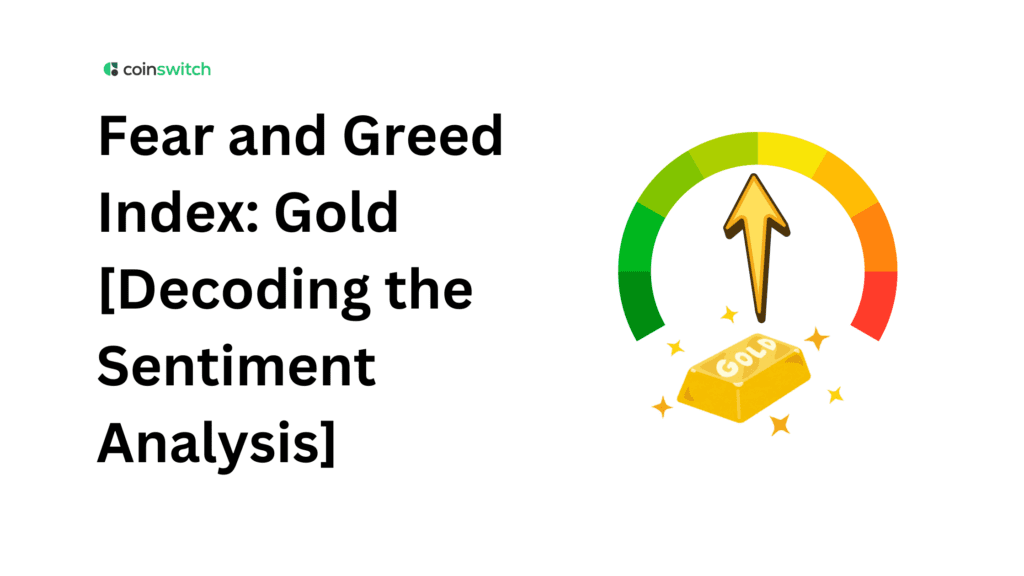
Introduction of the Gold Fear and Greed Index
Investors often rely on objective tools to interpret market psychology — especially in markets driven by emotion during times of uncertainty. One such tool gaining popularity is the Fear & Greed Gold Index, a sentiment gauge that measures how emotional reactions like fear and greed influence gold pricing and demand. Unlike traditional technical analysis, this index provides insight into investor behavior, helping to contextualize market movements beyond price charts.
What Is the Fear & Greed Gold Index?
The Fear & Greed Gold Index is a sentiment metric that quantifies investor emotions in the gold market on a scale of 0 to 100. It works on the principle that emotions drive markets: fear often results in safe-haven buying, while greed can signal complacency or overconfidence. The index draws on data sources like gold price volatility, premiums, social sentiment, retail interest, and online search trends to deliver a real-time picture of market mood.
A higher score indicates greed, where confidence and optimism dominate. A lower score indicates fear, often associated with economic uncertainty and a flight to safe havens like gold.
Why Gold’s Fear & Greed Matters
Gold has long been regarded as a safe-haven asset — a store of value when markets wobble, or fear dominates. During periods of market stress, investors often move capital from riskier assets (like equities or crypto) into gold to preserve value and reduce exposure to volatility. As a result, gold demand tends to rise when fear grips broader markets.
Conversely, when sentiment shifts toward greed and optimism, investors may rotate out of safe havens and into higher-risk assets such as stocks, crypto, or commodities with growth potential. In such periods, gold’s allure might diminish, which can be reflected in the Fear & Greed Gold Index.
How the Index Works
The Fear & Greed Gold Index typically categorizes sentiment into ranges that help frame investor psychology:
| Index Range | Sentiment Interpretation |
| 0–24 | Extreme Fear (heavy safe-haven demand) |
| 25–49 | Fear (cautious market environment) |
| 50 | Neutral (balanced market sentiment) |
| 51–74 | Greed (optimism, confidence grows) |
| 75–100 | Extreme Greed (over-confidence possible) |
These ranges help investors determine whether the gold market is being driven by anxiety, optimism, or traditional valuation trends.
Using the Fear & Greed Gold Index Effectively
The index is best understood as a complementary tool, not a standalone buy-or-sell signal. It’s most useful when combined with fundamental and technical analysis. For example:
- During High Fear: A low index score may correspond with strong gold demand, reflecting investors seeking shelter from broader market risks. This can be a time when long-term holders accumulate positions.
- During High Greed: Elevated scores may indicate complacency and reduced urgency for safe-haven exposure. Traders might interpret this as a cautionary sign that gold could be overbought and due for a pullback.
Because fear or greed can persist longer than expected, the index should be used to contextualize trends rather than time-exact entries or exits.
Read More: Crypto Fear & Greed Index
Real-World Example: Gold During Market Stress
Historical patterns reveal that fear tends to drive gold prices higher during systemic stress. In the 2008 financial crisis and the 2020 pandemic market turmoil, gold’s price increased sharply as investors sought safety. This “flight to safety” underscores the emotional dynamics that sentiment indexes aim to capture—movements that aren’t always obvious in price alone but become clearer in sentiment readings.
Limitations of the Fear & Greed Index
It is important to recognize that while the index provides valuable sentiment insights, it is not predictive in isolation. The index reflects current emotion but does not forecast future price movements with certainty. Market drivers like policy changes, inflation data, and geopolitical events often override sentiment signals. As such, it works best when used alongside traditional analyses and macroeconomic indicators.
Read More: Which crypto is often called digital gold?
Conclusion
The Fear & Greed Gold Index is a powerful sentiment gauge that helps investors understand the emotional climate of the gold market. By interpreting where investor psychology lies on the fear–greed spectrum, traders and long-term holders can make more informed decisions about positioning and risk management. While not a magic forecast tool, it adds valuable context to the ever-complex landscape of gold investing.
FAQs
1. What does a high Fear & Greed score mean for gold?
A high score suggests greed and strong confidence, potentially reducing gold’s appeal as a safe haven.
2. Does a low index reading always mean buy gold?
A low index reading indicates fear and safe-haven demand, but investment decisions should still consider other market factors.
3. Can gold stay in fear territory for long?
Yes — sentiment can remain fearful for extended periods, especially during economic uncertainty.
4. Is the Fear & Greed Gold Index a financial advice tool?
No. It is an educational sentiment indicator and should not replace professional investment advice.