Written by
  Reviewed by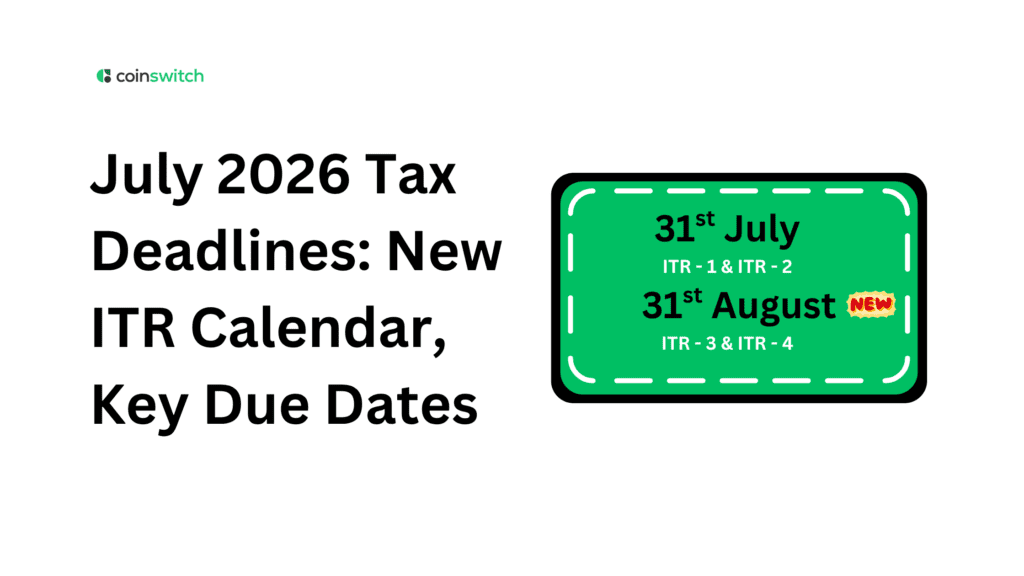
July 2026 Tax Deadlines: What Has Changed This Year?
July continues to be one of the busiest months in India’s tax calendar. However, Assessment Year (AY) 2026–27 introduces an important change that gives many business owners and professionals additional time to file their Income Tax Returns (ITRs).
Earlier, most non-audit taxpayers—including salaried individuals, freelancers, consultants, and small businesses—worked towards the same filing deadline. From AY 2026–27 onwards, the filing calendar has been split for certain taxpayer categories.
The biggest relief is for taxpayers with business or professional income who are not liable for a tax audit. Those filing ITR-3 or ITR-4 now have until 31 August 2026, giving them one additional month compared to the standard deadline applicable to salaried taxpayers. This change is intended to provide more time for bookkeeping, reconciliation, and preparing accurate tax returns.
While the revised ITR due date is welcome news for many businesses, July remains packed with other important compliance deadlines, including TDS payments, TDS certificates, challan-cum-statements, and Income Tax Return filing for salaried individuals.
July 2026 Tax Calendar at a Glance
| Due Date | Compliance | Applicable To |
|---|---|---|
| 7 July 2026 | Deposit of TDS/TCS deducted or collected during June 2026 | Employers, businesses, deductors |
| 15 July 2026 | Issue of applicable TDS certificates and specified quarterly compliances | Employers and deductors |
| 30 July 2026 | Submission of applicable challan-cum-statements for specified transactions | Applicable taxpayers |
| 31 July 2026 | Income Tax Return (ITR-1 & ITR-2) | Salaried individuals, pensioners and other eligible non-audit taxpayers |
| 31 August 2026 | Income Tax Return (ITR-3 & ITR-4 – Non-audit cases) | Freelancers, consultants, professionals and businesses not requiring tax audit |
| 31 October 2026 | Income Tax Return for taxpayers requiring audit | Businesses and professionals liable for tax audit |
| 30 November 2026 | Income Tax Return for transfer pricing cases | Eligible taxpayers |
Read More: How to Report Crypto F&O Profits in ITR 2026: Step-by-Step with INR Examples
New ITR Filing Calendar for AY 2026–27
One of the most notable tax changes this year is the revised filing schedule for business and professional taxpayers.
| Taxpayer Category | ITR Form | Due Date |
| Salaried Individuals, Pensioners, HUFs (No Audit) | ITR-1 / ITR-2 | 31 July 2026 |
| Business & Professional Income (No Audit) | ITR-3 / ITR-4 | 31 August 2026 |
| Tax Audit Cases | Applicable ITR Forms | 31 October 2026 |
| Transfer Pricing Cases | Applicable ITR Forms | 30 November 2026 |
| Belated Return | All Applicable Forms | 31 December 2026 |
| Revised Return | All Applicable Forms | 31 March 2027 |
What Does the New 31 August Deadline Mean?
The additional month primarily benefits taxpayers who earn income from business or professional activities but whose accounts are not required to be audited.
This includes many:
- Freelancers
- Consultants
- Doctors
- Lawyers
- Architects
- Chartered Accountants
- Small business owners
- Partnership firms not requiring an audit
- Taxpayers opting for the presumptive taxation scheme
The extended timeline gives these taxpayers more flexibility to:
- Complete bookkeeping
- Reconcile bank statements
- Verify TDS credits
- Match income with AIS and TIS
- Review business expenses
- File more accurate returns
Instead of rushing to meet a common July deadline, eligible taxpayers now have an additional month to complete their compliance.
Read More: Crypto Futures & Options Tax in India 2026: Complete Guide (30% Rule, TDS, ITR Filing)
July 2026 Compliance Checklist
Even if your ITR due date falls in August, July remains an important compliance month.
Before the month ends, make sure you have:
- Downloaded Form 16 (if applicable)
- Reviewed your Annual Information Statement (AIS)
- Verified TDS credits in Form 26AS
- Collected investment proofs
- Reconciled bank interest and capital gains
- Checked deductions under the applicable provisions
- Updated your bank account details on the e-filing portal
- Prepared your ITR well before the due date
Final Thoughts
The July 2026 tax deadlines are about more than just filing an Income Tax Return. While salaried taxpayers should continue preparing for the 31 July 2026 ITR deadline, businesses and professionals filing ITR-3 or ITR-4 without an audit requirement now have until 31 August 2026 to submit their returns.
Although the revised timeline reduces pressure for many business taxpayers, filing early remains a good practice. Early filing helps identify discrepancies sooner, speeds up refund processing, and minimizes last-minute technical issues on the e-filing portal.
As tax rules and compliance requirements can change through official notifications, always verify the latest updates before filing your return.
FAQs
1. What are the major July 2026 tax deadlines?
Some of the key due dates include TDS/TCS deposits, certain quarterly tax compliances, advance tax obligations for eligible taxpayers, and the Income Tax Return filing deadline for taxpayers who do not require an audit.
2. Is 31 July 2026 the ITR filing deadline for everyone?
No. The applicable due date depends on the category of taxpayer and whether an audit is required under the Income-tax Act. The government may also extend deadlines through official notifications.
3. What documents should I keep ready before filing my ITR?
Commonly required documents include Form 16 (where applicable), AIS, TIS, bank details, deduction proofs, and records of additional income such as interest, capital gains, or rental income.
4. Can the July 2026 tax deadlines change?
Yes. The Income Tax Department may revise or extend due dates through official notifications. Taxpayers should regularly check the official portal for updates.
5. Why is it important to file taxes before the deadline?
Timely filing helps avoid late fees, interest, processing delays, and unnecessary compliance issues while ensuring your tax records remain up to date.